
Term Life or Whole Life? The Answer Depends on Your "Why"
One of the most common questions I get from clients in Brampton and Mississauga is: "Pankaj, which life insurance is better? Term or Whole Life?" The truth is, neither is "better." They are just tools designed for completely different jobs. Asking which one is better is like asking, "Is a hammer better than a screwdriver?" It depends on whether you are trying to drive a nail or turn a screw.
In this guide, I will break down the differences in simple English, compare the costs, and help you decide which one fits your life stage right now.
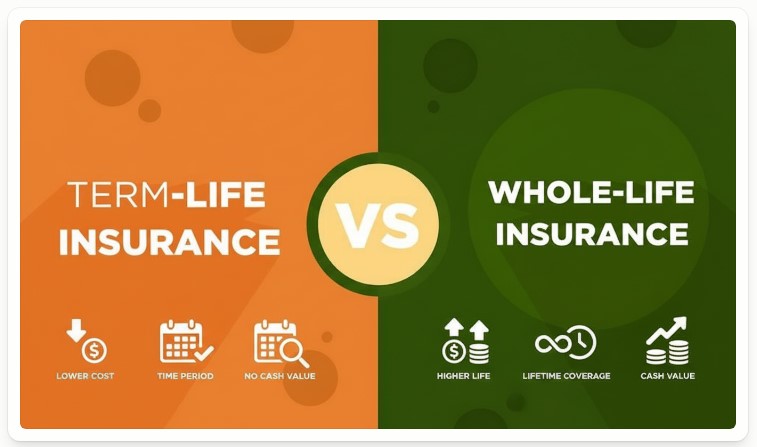
The Quick Comparison: What is the Difference?
| Feature | Term Life Insurance | Whole Life Insurance |
|---|---|---|
| Duration | Temporary (10, 20, or 30 years) | Permanent (Until you pass away) |
| Cost | Very Affordable (Low premiums) | Expensive (5x - 10x higher) |
| Cash Value | None (Pure protection) | Yes (Builds savings/equity) |
| Primary Goal | Income Replacement & Debt Cover | Estate Planning & Legacy |
| Payout | Only if you pass away during the term | Guaranteed payout whenever you pass |
1. Term Life Insurance: The "Just in Case" Protection
Think of Term Life insurance like renting a house. You pay a monthly fee to live there for a set period (10, 20, or 30 years). If you move out (the term ends), you don't own anything, but you had a roof over your head when you needed it most.
How It Works:
You buy coverage for a specific "term"—usually 10, 20, or 30 years. The price is locked in for that entire period. If you pass away during that time, your family gets the money tax-free. If the term expires and you are still alive (which is good news!), the policy simply ends.
Who is Term Life For?
- Young Families: If you have young children and a mortgage, you have a high financial risk right now. If you pass away, your family needs to pay off the house and replace your income.
- Business Owners with Loans: Banks often require life insurance collateral to approve a business loan. Term insurance is the cheapest way to satisfy this requirement.
- Budget-Conscious Buyers: You can get $500,000 of coverage for as little as $30-$40/month (depending on age/health).
Pros:
- Extremely affordable.
- Simple to understand.
- Perfect for covering temporary debts (Mortgages).
Cons:
- No cash value (you don't get money back if you outlive the term).
- Renewing it after the term ends is very expensive.
2. Whole Life Insurance: The "Forever" Asset
Think of Whole Life insurance like buying a house. The monthly payments (premiums) are much higher, but you are building equity. Eventually, you own an asset that will definitely pay out.
How It Works:
As long as you pay your premiums, you are covered for life—whether you live to 50 or 105. Part of your monthly premium goes into a "Cash Value" account that grows over time. You can sometimes borrow against this money or use it for retirement. ]
Who is Whole Life For?
- High Net-Worth Individuals: You have maxed out your RRSP and TFSA and want a tax-efficient way to leave money to your heirs.
- Estate Planning: You want to leave a specific legacy (e.g., $100,000) to your children or a charity to cover capital gains taxes on your estate (like a family cottage).
- Final Expenses: You want a small policy (e.g., $25,000) just to ensure your funeral costs are covered so your kids don't have to pay.
Pros:
- Guaranteed payout (it never expires).
- Premiums never increase (locked in for life).
- Builds cash value that you can access.
Cons:
- Much more expensive (can be $200+ month for the same coverage as a $30 Term policy).
- More complex to understand.
The "Secret" Third Option: Convertible Term Insurance
Many people don't know this, but you don't always have to choose right now. Most Term Life policies I sell come with a "Conversion Privilege." This means you can buy affordable Term Insurance today (to protect your young family), and later, you can convert it into a Whole Life policy without a medical exam.
Example: You buy a Term policy at age 30 because money is tight. At age 45, you are earning more and want permanent protection. You can flip your Term policy into a Whole Life policy, and the insurance company cannot say no—even if your health has gotten worse!
Verdict: Which One Should You Buy?
- Choose Term Life If: You need maximum coverage for the lowest price to protect your mortgage and kids until they are grown up.
- Choose Whole Life If: You want to leave a guaranteed inheritance, cover funeral costs, or have complex tax planning needs.
I can show you a side-by-side comparison of what a Term policy vs. a Whole Life policy would cost for your specific age.
Get a Quote
Or call me for a quick chat:
647-640-2222
Pankaj Bhatia – Your Financial Partner